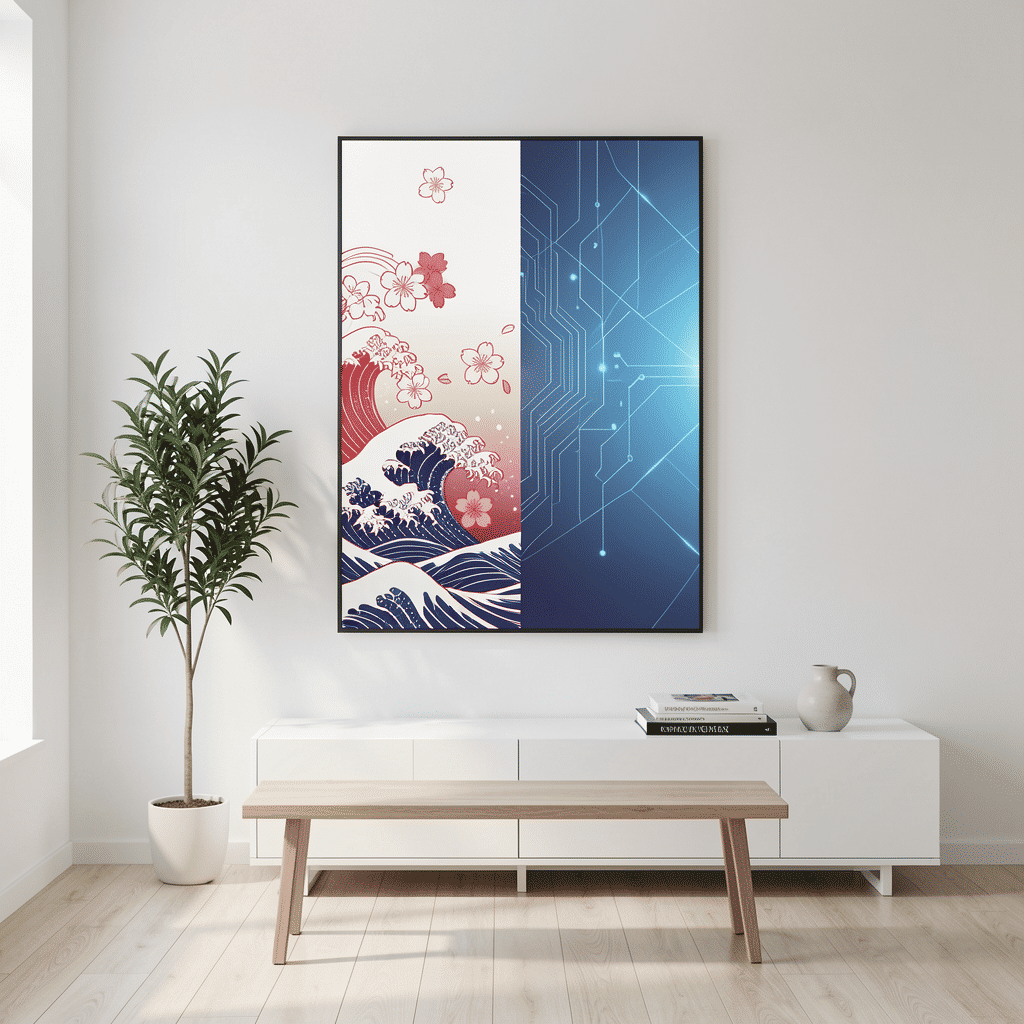
In the unique landscape of Japan, where history and modernity coexist in captivating harmony, the fusion of traditional culture with cutting-edge technological innovations has given rise to a distinctive design ethos. This blend is not merely an aesthetic choice but an embodiment of the nation's spirit, reflecting a deep-seated respect for heritage while embracing the possibilities of the future.
At the heart of this fusion lies the Japanese concept of "Monozukuri," a term that denotes the art, science, and craft of making things. This philosophy, deeply ingrained in Japanese culture, celebrates craftsmanship and attention to detail, whether in crafting delicate pottery or in the precision of automotive engineering. Monozukuri finds its modern expression in Japanese design, which champions functionality and harmony in both traditional and innovative contexts.
One of the most profound examples of this cultural and technological synthesis is seen in architecture. Consider the minimalist aesthetics of traditional Japanese homes, with their emphasis on natural materials like wood and paper, and their focus on creating harmony with the surrounding environment. This approach is mirrored in contemporary architectural marvels such as the Kengo Kuma-designed National Stadium in Tokyo, a stunning blend of wooden lattice structures with futuristic design, balancing eco-friendliness with state-of-the-art engineering.
In the realm of fashion, designers like Issey Miyake have long drawn inspiration from traditional Japanese textiles and techniques while integrating new technologies. Miyake's innovative garments often feature high-tech fabrics and sustainable methods, marrying the artisanal with the avant-garde. His pleated textile designs, for example, reflect a convergence of ancient Kimono sensibilities and industrial advances, creating clothing that is both timeless and revolutionary.
The intersection of culture and technology is also vivid in the traditional craft of creating Japanese paper, washi. Historically used for everything from writing to art, washi is now being integrated into modern technological designs. Innovations include washi being used as a sustainable material in electronics and lighting, such as in the development of translucent washi LED panels that merge the soft glow of traditional lamps with energy-efficient technology.
Furthermore, Japan's entertainment industry stands as a prime example, with the anime and video game sectors often serving as cultural emissaries on the global stage. These industries ingeniously incorporate traditional elements, such as samurai folklore and Edo-period art styles, into richly textured digital universes. This blend of past and present resonates with global audiences, showcasing a uniquely Japanese approach to storytelling that respects history while pushing creative boundaries.
In everyday life, this fusion is evident in the pervasive use of robotics and artificial intelligence (AI) which, while being at the forefront of technological trends, often exhibit designs and functions that reflect Japanese cultural elements. Robotic assistants, designed with the friendliness and aesthetics reminiscent of traditional mascots, serve as modern companions that honor Japan's long-standing relationship with animism and nature, integrating seamlessly into the collective cultural psyche.
Ultimately, the fusion of traditional Japanese culture with modern technology is more than a mere juxtaposition. It is a dynamic dialogue between the old and the new, the static and the evolving. This dialogue continuously reshapes Japan’s identity, offering insights and innovations that are uniquely its own. In celebrating this fusion, Japan not only preserves its rich cultural legacy but also pioneers new paths in design and creative exploration, inspiring the world with its vision of a harmonious future.