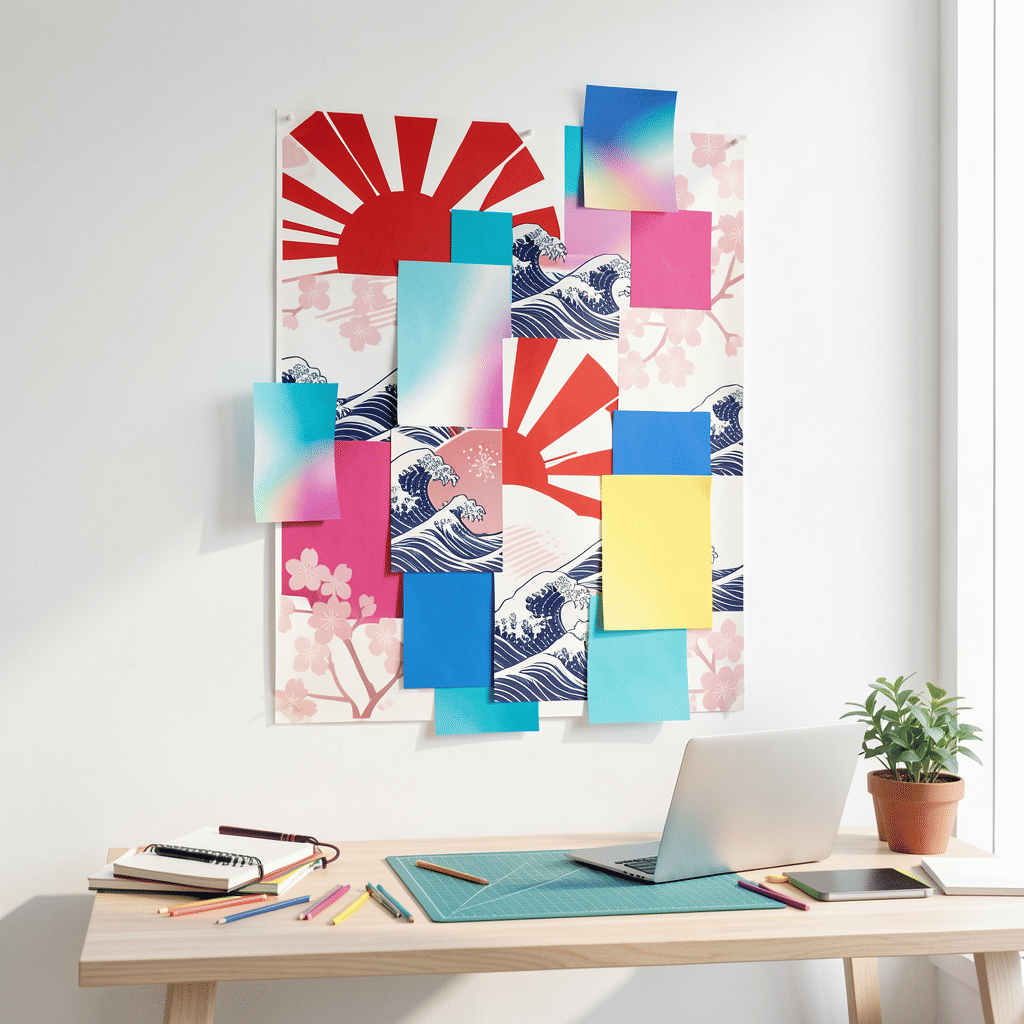
Japanese graphic design is a multifaceted art form that has captivated audiences worldwide with its unique blend of tradition, innovation, and cultural sensitivity. The evolution of Japanese graphic design is a story that spans centuries, blending the ancient with the avant-garde to create a vibrant tapestry of visual expression.
The story of Japanese graphic design begins in the era of Ukiyo-e, which translates to "pictures of the floating world." This art form flourished between the 17th and 19th centuries and was characterized by woodblock prints and paintings. Ukiyo-e depicted a wide range of themes, from landscapes and traditional mythologies to kabuki and geisha culture, all permeated by harmonious compositions and meticulous attention to detail. These prints became a crucial influence on Western art movements like Impressionism and Art Nouveau, igniting a mutual appreciation between Eastern and Western cultures.
Moving into the 20th century, Japan experienced a fusion of cultural influences amidst its own rapidly changing societal landscape. The post-World War II era marked a shift as Japan embraced modernism in its quest for national renewal. Designers like Yusaku Kamekura emerged during this time, who is revered for his groundbreaking work on the Tokyo 1964 Olympics. Kamekura's use of bold typography and strong imagery created a new visual lexicon and proved instrumental in establishing a global identity for Japanese graphic design.
As Japan entered the bubble economy period of the 1980s, graphic designers began experimenting with new materials and technologies. The burgeoning advertising industry and consumer culture ushered aesthetic innovations and the rise of icons such as Tadanori Yokoo, known for his psychedelic pop art style that borrowed elements from both Eastern and Western cultures, creating an appealing and provocative visual narrative.
The advances in digital technology and the rise of the internet in the late 20th and early 21st centuries further propelled Japanese graphic design into new realms. Designers like Takashi Murakami led the 'Superflat' movement, blending contemporary art with commercialism to create digital artworks that resonate globally. Murakami's kaleidoscope of vibrant colors, flat surfaces, and playful motifs has redefined traditional perceptions of art and design, demonstrating the fluid nature between different visual cultures and time periods.
Recently, the minimalist aesthetic, a hallmark of Japanese design, has found a new domicile in digital spaces. With the global appeal for clean, intuitive interfaces, Japanese designers have excelled at creating user experiences that are both beautiful and functional. This movement stems from traditional minimalist philosophies such as wabi-sabi, which appreciates imperfection, transience, and simplicity, influencing not only graphic but also industrial and digital design worldwide.
In sculptures, architecture, fashion, and beyond, Japanese graphic design continues to inspire global artistic communities, encouraging a dialogue that transcends cultural and disciplinary boundaries. Today's Japanese designers seamlessly integrate elements from traditional folk art to cutting-edge digital technologies, crafting compelling visual experiences that honor their heritage while embracing the possibilities of the future.
The evolution of Japanese graphic design is a testament to the country's ability to bridge the old and the new with creativity and innovation. As the world continues to change at an unprecedented pace, Japan's graphic designers remain at the forefront, constantly redefining what it means to communicate through visual art. As such, this journey from traditional artwork to contemporary digital design not only showcases a rich historical legacy but also highlights the ongoing global impact of Japanese design philosophy.